Balázs Gulyás: HUN-REN Offers New Perspectives for Young Researchers
The international scientific landscape is increasingly moving towards a model where emerging knowledge is immediately transformed into social and economic impact as it enters the value chain, emphasized Balázs Gulyás, president of the HUN-REN Hungarian Research Network, at the XIII. Milestone Conference. The event, organized by the National Association of Doctoral Students (DOSZ), was also attended by Balázs Hankó, the Minister of Culture and Innovation.
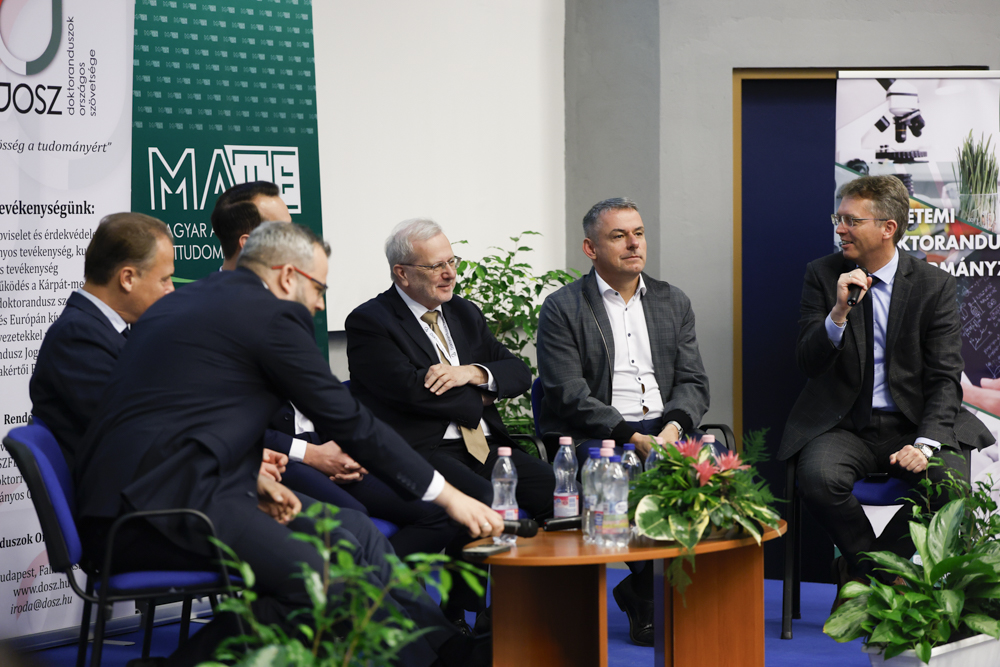
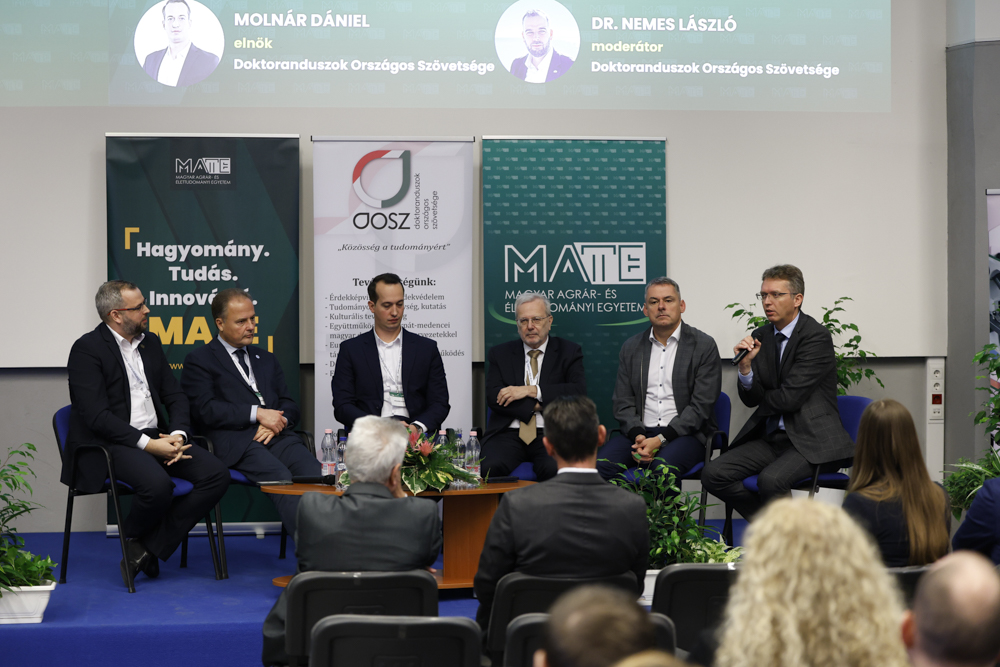
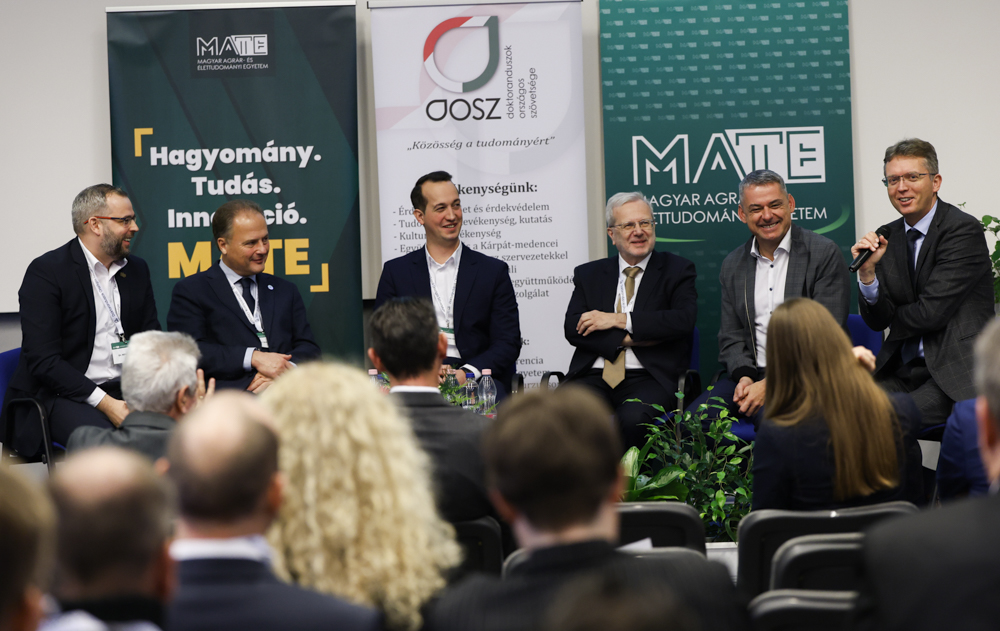
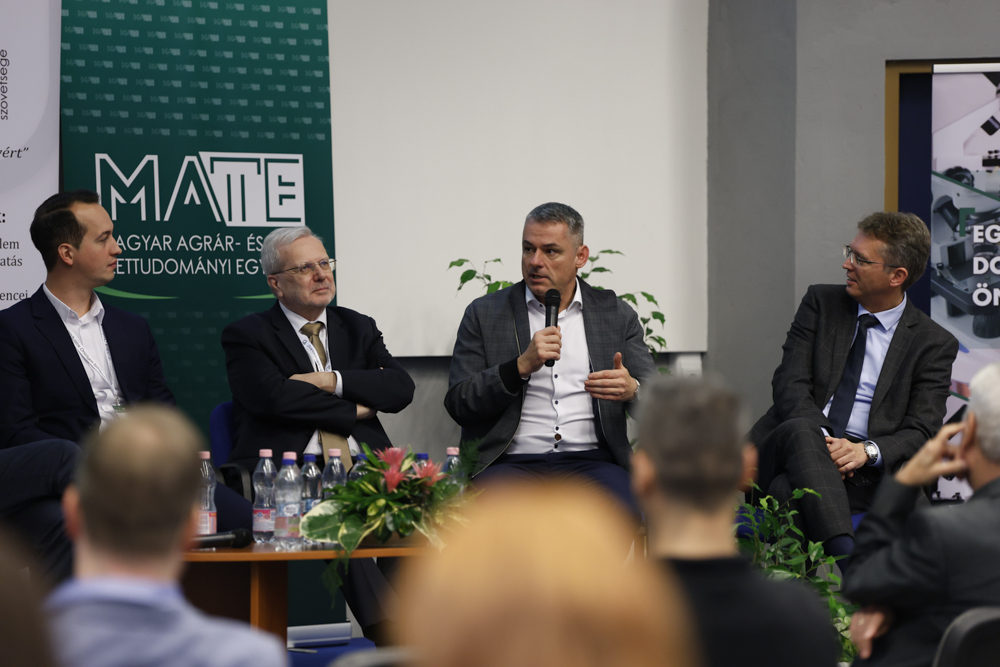
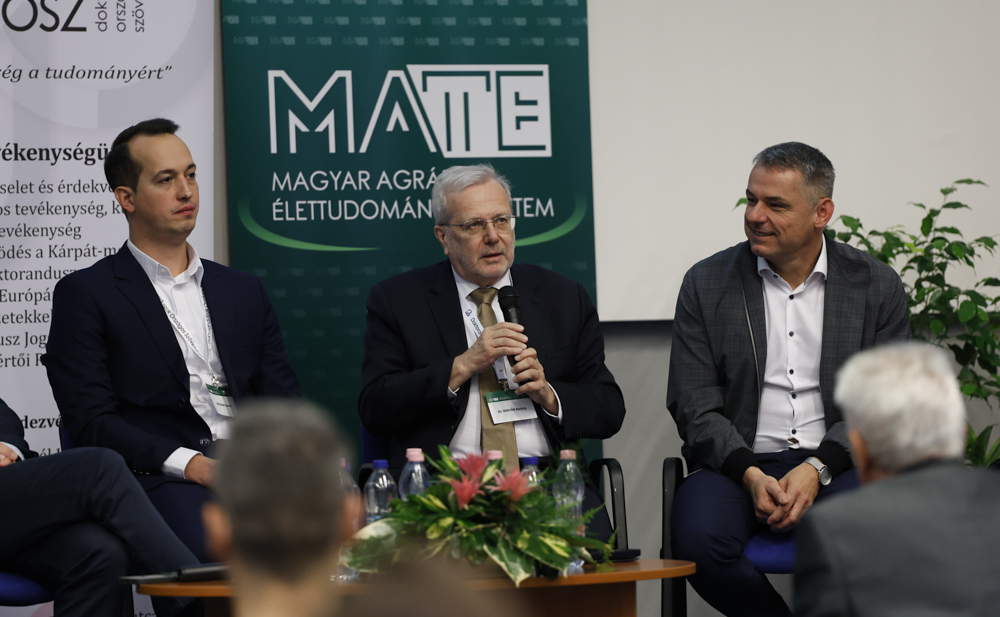
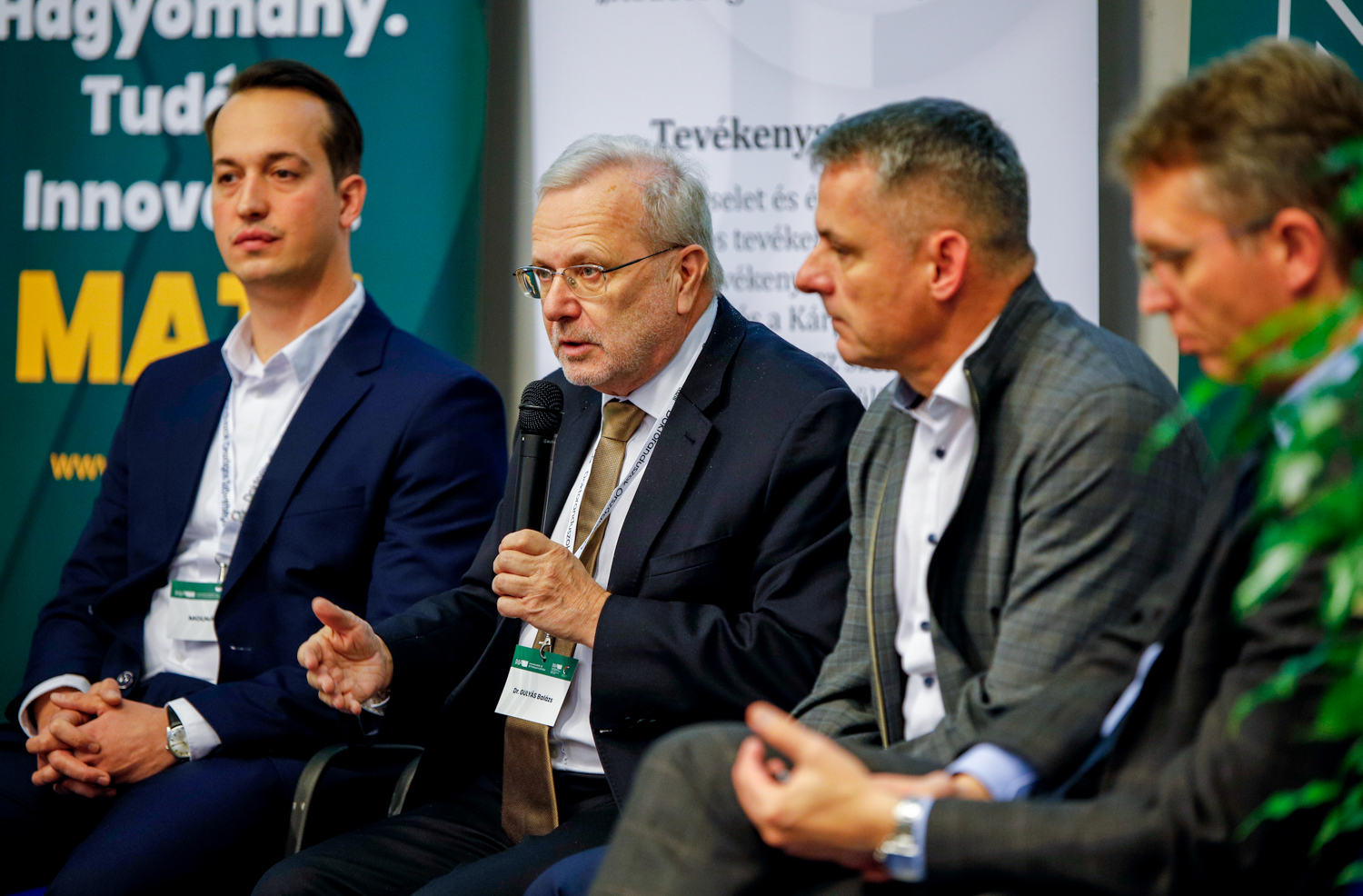
A roundtable discussion focusing on the strategic issues of doctoral training, the situation of scientific communities, and the opportunities available to young researchers was highlighted at the conference, which assessed new perspectives and breaking points in research careers.

Fotó: MATE Médiaközpont
The Key to Competitiveness: The Value Chain and Impact
“Knowledge production is no longer about writing an article or a book and putting it in a drawer. The knowledge created must be brought into the value chain, where it generates immediate impact: people’s lives will improve, and the country’s economy will benefit,” Gulyás Balázs explained at the forum. He cited examples from Hong Kong, Singapore, and China, where universities already operate with this mindset. He noted that major Southeast Asian universities generate licenses daily and manage a patent portfolio of at least 3,000 to 4,000 items. Some of these will become spin-off companies, and a few will birth so-called “unicorns,” or technology companies valued at over one billion dollars. This is a completely different model than what Europe follows, and the results are reflected in the decline of European competitiveness indicators, assessed the HUN-REN president.
Gulyás Balázs stated that HUN-REN's goal is to strengthen the model focused on the value chain and impact domestically. He reminded that the Hungarian Research Network recently signed a cooperation agreement with three Southeast Asian universities.
HUN-REN’s Goal: 4,000 Patents and at Least One Unicorn in Ten Years
“The long-term aspiration of the network is to have at least a 4,000-item patent portfolio within ten years and to play an active role in the launch of at least 40 high-value spin-off companies, among which there should be one unicorn,” the president outlined the goals. He stated that this is not an impossible task. The Chinese University of Hong Kong (CUHK) was established in 1991 and now boasts 8 unicorns, while the City University of Hong Kong has launched six high-value technology companies.
According to Gulyás Balázs, a key element of this vision is that researchers should confidently navigate not only the academic path but also the world of economy and innovation. Today’s research career is no longer exclusively linear and academic; young professionals need to gain experience in multiple areas, such as company founding and corporate collaborations. “A researcher may only earn their PhD at 45, but until then, they accumulate experiences and enrich their skill set, allowing them to have a much larger impact on industry or society,” he said.

Fotó: MATE Médiaközpont
Intellectual Communities that Create Schools are Needed to Attract Talent
The HUN-REN president emphasized that in order to strengthen the research career and actively participate in international collaborations, a stable economic and financial background, as well as modern infrastructure, is not sufficient. “We need to establish an extremely high-quality environment, a spirit of creating schools,” he stated. Based on his personal experiences, he noted that an inspiring research community that shares similar thinking, seeks challenges, and discusses significant scientific questions at a high level greatly contributes to attracting talent, whether they are Hungarian researchers living abroad or non-Hungarian researchers.
He also highlighted the importance of selecting research topics: global challenges attract world-class researchers.
AI and Digital Transformation: The Role of Researchers is Being Enhanced
The roundtable discussion on the future could not overlook issues related to digitalization and AI. Gulyás Balázs assessed that new technologies open up fantastic opportunities for researchers, and their work will be needed even more. He stated: “The researcher conducts and coordinates various agent systems, which accelerates development. Therefore, we must accept and learn to apply technological applications.”


'%3e%3cg%20transform='translate(360.645%203210.941)'%3e%3cpath%20d='M0,9.915l2.339,2.479L9.355,4.958l7.016,7.437,2.339-2.479L9.355,0Z'%20transform='translate(0%200)'%20fill='%23fff'/%3e%3c/g%3e%3cg%20transform='translate(360.645%203220.663)'%3e%3cpath%20d='M0,9.915l2.339,2.479L9.355,4.958l7.016,7.437,2.339-2.479L9.355,0Z'%20transform='translate(0%200)'%20fill='%23fff'/%3e%3c/g%3e%3c/g%3e%3c/svg%3e)